Reconciliation therapy for estranged family members
Sometimes family relationships become disconnected, fractured, or estranged. A parent and adult child may stop speaking. Siblings may become distant after years of unresolved conflict. Family members may struggle to reconnect after divorce, remarriage, major life changes, or painful events from the past.
Reconciliation Therapy provides a structured, supportive environment for family members who want to explore whether and how they can rebuild their relationship. The goal is not to erase the past or force family members to agree. Instead, reconciliation therapy focuses on developing greater understanding, repairing damaged trust when possible, establishing healthy boundaries, and creating a more workable relationship moving forward.
Reconciliation can be deeply personal and emotionally difficult. Family members may arrive with very different understandings of what happened, who was hurt, and what needs to change. One person may want to reconnect while another remains cautious or uncertain. Therapy can provide a place to slow the process down, understand each person's experience, and determine what a healthier relationship might look like.
Reconciliation Does Not Mean Going Back to the Way Things Were
Successful reconciliation does not necessarily mean returning to the relationship exactly as it existed in the past. In many cases, the relationship needs to change in order to become healthier.
For some families, reconciliation may mean rebuilding a close relationship. For others, it may mean developing a more respectful and limited relationship, establishing new boundaries, or learning how to interact during family gatherings without returning to old patterns of conflict.
The goal is to help family members determine what kind of relationship is realistic, healthy, and mutually acceptable going forward.
Creating a Safe Space for Difficult Conversations
Effective communication is an important part of the reconciliation process. Family members often become stuck in cycles of defensiveness, criticism, withdrawal, anger, or avoidance. Attempts to resolve the problem on their own may quickly turn into arguments about who is right or wrong.
Reconciliation Therapy provides a structured setting in which family members can slow these interactions down and communicate more effectively. Each person has an opportunity to express their perspective, feelings, needs, and concerns while learning to listen to the other person's experience.
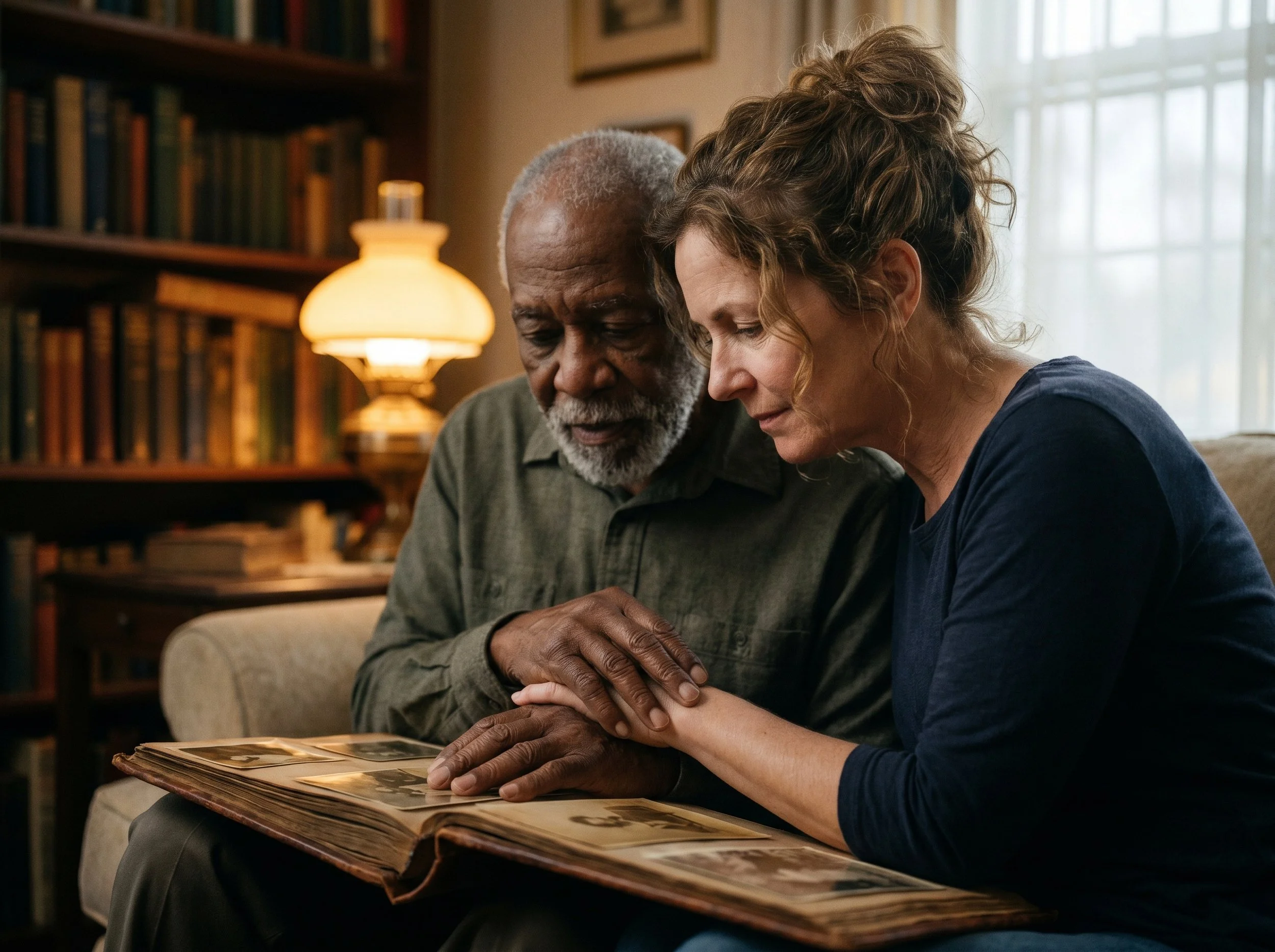
Restoring communication can mean protection of family legacy and memories.
The therapeutic setting is not about deciding who is "the bad guy" or determining whose version of the past is correct. Instead, therapy can help family members move from blame and defensiveness toward understanding, accountability, and productive communication.
Understanding What Is Beneath the Conflict
Family estrangement is rarely about only the most recent disagreement. Current conflict may be connected to years of hurt, disappointment, unmet expectations, misunderstandings, or unresolved family experiences.
Strong emotions such as anger may sometimes protect more vulnerable feelings such as grief, rejection, loneliness, fear, or hurt. Exploring these underlying emotions can help family members better understand their own reactions and recognize the emotional experience of the other person.
Understanding another person's experience does not require agreeing with their interpretation of events. Reconciliation therapy focuses on helping family members develop the capacity to say, in essence, "I can understand why this affected you the way it did," even when they remember or interpret the past differently.
Common Reasons Families Become Estranged
Estrangement can develop for many different reasons, and there is rarely a single explanation. Common contributing factors may include:
Divorce, remarriage, or changes in family structure
Conflict between parents and adult children
Unresolved childhood or historical family conflict
Sibling conflict
Differences in parenting or family expectations
Sexual orientation or gender identity
Political or ideological differences
Religious or spiritual differences
Lifestyle or value differences
Romantic relationships or marriage choices
Perceived rejection, criticism, or lack of acceptance
Significant disagreements about boundaries
Betrayal or breaches of trust
Substance use or other disruptive behaviors within the family
Major life transitions
Geographical distance or prolonged separation
Long-standing patterns of poor communication
Grief, loss, or other significant family events
Sometimes estrangement develops gradually. Other times, a single event creates a significant rupture. Regardless of how the estrangement began, the process of rebuilding a relationship requires attention to both the history of the relationship and the interactions that occur today.
What Happens in Reconciliation Therapy?
The process is individualized based on the needs of the family members involved. Therapy may include:
Establishing Shared Goals
Family members identify what they hope to accomplish through therapy. Goals may include rebuilding trust, improving communication, developing a more respectful relationship, reconnecting gradually, or creating healthier boundaries.
Understanding Each Person's Perspective
Each family member has an opportunity to describe their experience of the relationship. Therapy helps family members communicate their perspectives without turning the conversation into a debate over whose version of events is correct.
Acknowledging Past Hurt
Moving forward often requires acknowledging what happened in the past. This may involve recognizing the impact of specific behaviors, misunderstandings, disappointments, or relationship patterns.
Acknowledgment does not require every family member to agree about every detail. It does require taking the other person's experience seriously.
Rebuilding Trust
Trust is generally rebuilt through consistent behavior over time rather than through a single conversation or apology. Therapy can help family members identify what would make the relationship feel safer and more trustworthy and develop realistic ways to demonstrate those changes.
Developing Empathic Communication
Family members learn skills for expressing difficult feelings and needs while also listening to the other person's experience. This includes reducing defensiveness, avoiding personal attacks, asking clarifying questions, validating emotions, and communicating with greater empathy.
Developing Conflict-Resolution Skills
Conflict is not necessarily a sign that reconciliation has failed. Healthy relationships require the ability to navigate disagreements without returning to destructive patterns.
Therapy may focus on identifying triggers, interrupting escalating interactions, repairing after conflict, and developing more constructive ways to address disagreements.
Establishing Healthy Boundaries
Reconciliation does not require unlimited access, complete agreement, or the elimination of boundaries. In fact, healthy boundaries can be an important part of rebuilding a relationship.
Family members may develop specific agreements about communication, topics of conversation, visits, holidays, personal information, or other areas that have historically created conflict.
Developing Agreements for Future Interactions
Rather than focusing exclusively on what happened in the past, therapy can help family members identify what they want their relationship to look like moving forward.
This may include specific agreements about how family members will communicate, how disagreements will be handled, and what each person can reasonably expect from the relationship.
Exploring Forgiveness
Forgiveness can be part of reconciliation, but it is not something that can be forced or rushed. Reconciliation therapy can help family members explore what forgiveness means to them and whether it is something they want to pursue.
Forgiveness also does not mean minimizing what happened, forgetting the past, removing appropriate boundaries, or excusing harmful behavior.
Healing From the Past
Ultimately, reconciliation involves more than resolving a particular disagreement. It may involve grieving what the relationship has been, accepting what cannot be changed, developing a different understanding of the past, and deciding what kind of relationship is possible in the future.
Reconciliation Is a Process, Not a Single Conversation
Family estrangement generally develops over time, and meaningful change often does as well. Reconciliation therapy provides a structured process for addressing the underlying relationship dynamics rather than expecting one conversation to resolve years of conflict.
Progress may occur gradually. Sometimes the first step is simply being able to communicate without escalating into an argument. Over time, family members may become better able to understand one another, establish appropriate boundaries, rebuild trust, and create new patterns of interaction.
The purpose of reconciliation therapy is not to force reconciliation. It is to help family members determine whether a healthier relationship is possible and, when both are willing, provide the structure and skills needed to work toward it.